Enterprise Software Development: 6-Step Process That Works

Introduction

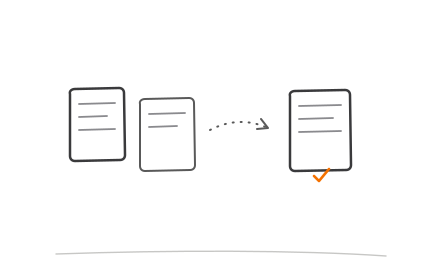
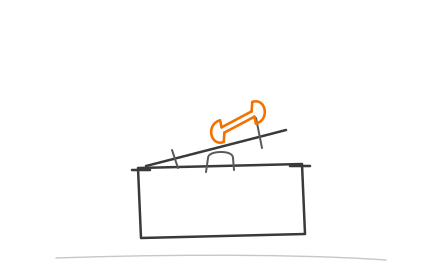
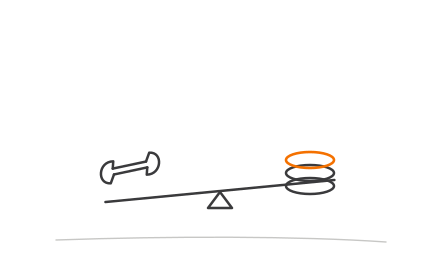
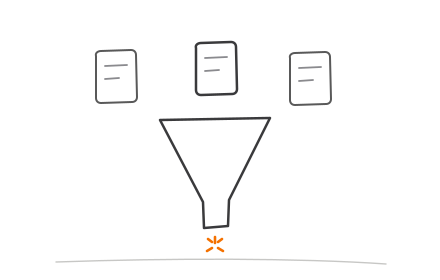
Building software for a large organization is fundamentally different from building a consumer app. The stakes are higher, the systems are more complex, and the margin for error is razor-thin. According to the Standish Group CHAOS Report, only 31% of software projects successfully meet all time, budget, and scope targets — 50% are delivered late or over budget, and 19% fail entirely.

Despite how often "enterprise software development" is discussed, very few teams follow a disciplined, repeatable process. That gap is exactly why projects run over budget, miss deadlines, or ship the wrong thing entirely.

This article breaks down a proven 6-step process that addresses each of these failure points directly. You'll get a structured framework to build software that scales with your business, integrates with existing systems, and delivers real business outcomes.

TL;DR

  • Standard software breaks under enterprise demands — scale, security, integrations, and complex workflows require a different approach
  • Without a structured development process, projects suffer from scope creep, integration failures, and misaligned outcomes
  • The 6-step process: requirements gathering, architecture planning, UI/UX design, development, testing/QA, deployment and maintenance
  • Skipping or rushing any stage directly raises project risk and costs
  • Choosing a partner with full-cycle delivery experience — from architecture to post-launch support — is as critical as the process itself

What Is Enterprise Software Development (and Why It Needs a Structured Process)?

Enterprise software development is the process of designing, building, and deploying software systems tailored to the operational needs of large organizations—covering functions like finance, HR, CRM, ERP, and supply chain management. These systems support complex business processes across multiple departments, often serving hundreds or thousands of users simultaneously.

How Enterprise Software Differs

Enterprise software differs fundamentally from standard or consumer software in several critical ways:

  • Supports large, distributed user bases across multiple locations and time zones
  • Connects with legacy systems, existing CRMs, ERPs, and third-party APIs without breaking existing workflows
  • Meets strict regulatory standards — GDPR, HIPAA, SOC 2 — as non-negotiable requirements
  • Scales and remains maintainable for years as the business evolves

To illustrate: a simple invoicing tool might serve a single user or small team with basic billing functions. A full ERP system, by contrast, orchestrates procurement, inventory, finance, HR, and reporting across an entire enterprise—often integrating with dozens of existing systems and serving thousands of concurrent users. That scale of complexity is exactly what makes structure non-negotiable.

Why Structure Matters

Enterprise software development requires a structured, multi-stage process because the consequences of failure are severe. Poor requirements gathering causes 39% of software project failures, leading to misaligned stakeholder expectations, integration failures mid-project, ballooning scope, and deployment delays.

The 6-step process exists to prevent these cascading failures — ensuring each phase feeds into the next with clear documentation, validation, and accountability.

The 6-Step Enterprise Software Development Process

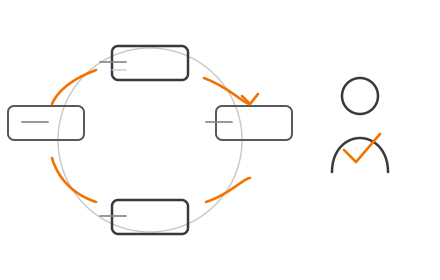
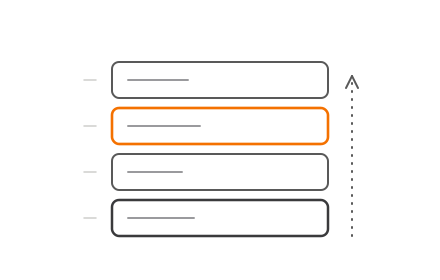
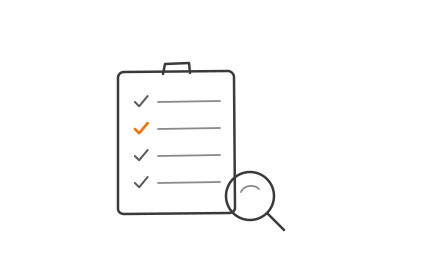
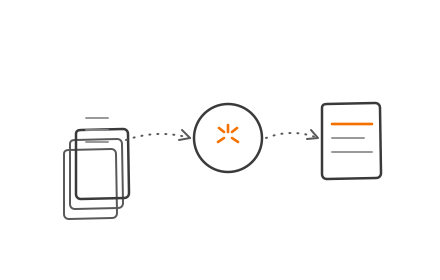
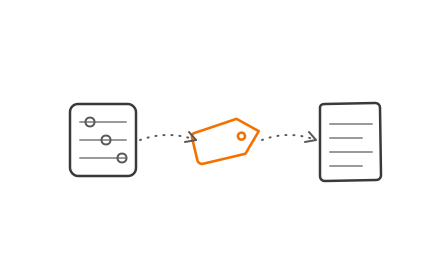
The 6-step process is a lifecycle, not a checklist—each phase feeds into the next, and skipping stages creates compounding problems later. Modern teams often use Agile methodology within this framework, enabling iteration without losing structure. While exact nomenclature varies by team or vendor, these 6 stages represent the consistent core across successful enterprise software projects.

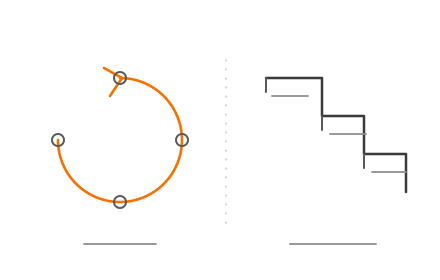
6-step enterprise software development lifecycle process flow infographic

Step 1: Requirements Gathering and Discovery

This stage is where business and IT must align. The discovery phase involves:

  • Stakeholder interviews across departments to understand workflows and pain points
  • Workflow mapping to document current processes and identify inefficiencies
  • Identification of functional requirements (what the system must do) and non-functional requirements (performance, compliance, scalability)
  • Documentation of what success looks like, including measurable KPIs

The Cost of Skipping Discovery:

Misunderstood requirements are the leading cause of rework and project failure. Organizations that prioritize communication and problem-solving during discovery reduce wasted investment from 8.8% to 4.8%. Rushing to code without thorough discovery is a false economy—you'll pay exponentially more later to fix what should have been clarified upfront.

Step 2: Architecture Planning and Technology Selection

This stage translates requirements into technical blueprints. Key activities include:

  • System architecture design defining how components communicate
  • Technology stack selection (languages, frameworks, databases, cloud platforms)
  • Integration strategy detailing how the new system will connect with existing CRM, ERP, or legacy infrastructure
  • Cloud vs. on-premise deployment decisions based on security, scalability, and cost

Long-Term Consequences:

Decisions made here have long-term consequences. A poorly chosen architecture limits scalability and increases future maintenance costs—which can consume 50% to 80% of a software application's Total Cost of Ownership. Key non-negotiables at this stage include security architecture, data governance design, and API strategy.

The Integration Challenge:

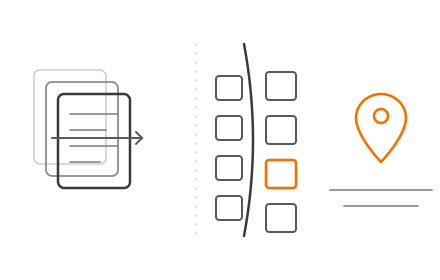
The average enterprise uses 991 applications, but only 28% are integrated. Failed digital transformation initiatives put an average of ₹56.6 crore in revenue at risk per organization. Your integration strategy must address this from day one.

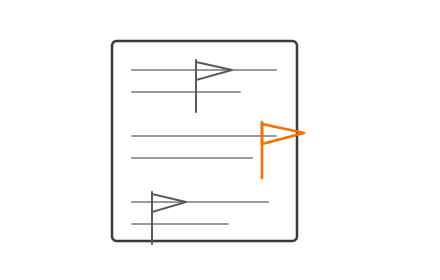
Enterprise application integration gap showing 991 apps and 28 percent connected statistic

Step 3: UI/UX Design and Prototyping

UX matters in enterprise software specifically because complex systems with poor interfaces lower adoption rates, require extensive training, and reduce ROI. This stage involves:

  • Wireframes defining screen layouts and information hierarchy
  • Prototypes simulating user flows and interactions
  • User testing with actual end-users across departments
  • Iterative refinement based on stakeholder feedback

The Prototyping Dividend:

This phase is iterative—stakeholder feedback on prototypes here is far cheaper than changes made after development begins. Validating UX designs pre-launch yields a 415% ROI and reduces developer rework by 25%, saving an average of ₹20.8 crore over three years.

Codiot's UI/UX practice covers the full scope of this phase: user research, wireframing, prototyping, and responsive implementation—making it a practical option for teams that need this work done alongside their development engagement.

Step 4: Agile Development and Iterative Build

The build phase is where development teams write code, build modules, and integrate components in sprints—with regular demos and feedback loops. Key characteristics include:

  • Breaking the project into 2-4 week sprints with defined deliverables
  • Regular demos and stakeholder feedback sessions
  • Distinction between low-code development (for faster delivery of standard components) and custom code (for unique business logic)
  • Continuous integration and version control

The Hybrid Agile Reality:

74% of organizations now use hybrid or homegrown Agile models that balance iterative speed with necessary governance. Breaking the project into sprints allows requirements to evolve without derailing the project—critical in enterprise environments where business needs shift during development.

Step 5: Testing and Quality Assurance

Enterprise software testing is more rigorous than standard testing because the cost of failure is higher. Key testing types include:

  • Unit testing: Validates individual components function correctly
  • Integration testing: Ensures modules work together and data flows properly
  • Performance/load testing: Confirms the system handles expected user volumes
  • Security/penetration testing: Identifies vulnerabilities before deployment
  • User acceptance testing (UAT): Validates the system meets business requirements

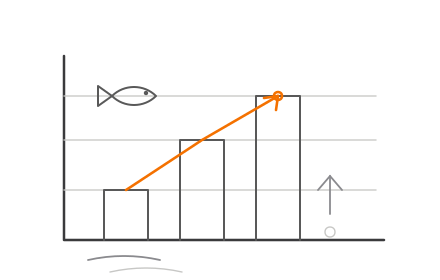
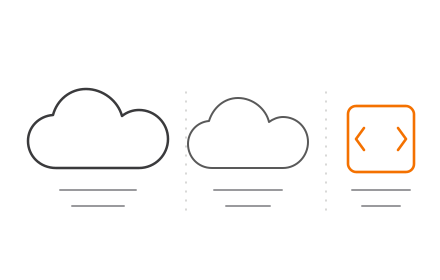
Five enterprise software QA testing types from unit testing to user acceptance testing

The Late-Stage Defect Penalty:

QA should not be treated as a final gate—it should be embedded throughout the process. Fixing a software defect in production can cost up to 100 times more than catching it in the design phase. Globally, inadequate testing infrastructure costs enterprises trillions annually in defects, downtime, and emergency fixes.

Step 6: Deployment, Maintenance, and Ongoing Support

The deployment phase includes:

  • Rollout strategy: Phased rollouts vs. full cutover based on risk tolerance
  • Change management: Communication plans and stakeholder training
  • User training: Documentation, workshops, and support resources
  • Post-launch support: Monitoring, bug fixes, and performance optimization

Deployment Is Not the Finish Line:

Enterprise deployments rarely happen overnight—planning the rollout strategy is as important as the build itself. Ongoing maintenance, security patches, performance monitoring, and modernization (cloud migration, AI feature integration) are part of the software lifecycle. Teams that treat go-live as the finish line end up with systems that degrade quickly.

Key Factors That Influence Enterprise Software Development Success

Stakeholder Alignment Across the Full Lifecycle

Stakeholder alignment must extend beyond kickoff. When business and IT teams operate in silos, requirements shift without formal documentation, creating scope creep. Cross-functional ownership—where business stakeholders remain engaged through design, development, and testing—directly reduces the rework cycles that inflate budgets and delay launches.

Integration Complexity

Most enterprise environments contain legacy systems that weren't designed to communicate with modern applications. The quality of the integration strategy—API design, data mapping, middleware selection, and error handling—directly determines timelines, costs, and system reliability. 88% of organizations report that integration challenges actively slow down their digital transformation initiatives.

Scalability and Compliance as Design Constraints

Scalability and compliance are non-negotiable design constraints, not afterthoughts. Industry-specific compliance requirements include:

  • GDPR for data privacy (fines up to €20 million or 4% of worldwide revenue)
  • HIPAA for healthcare data protection
  • PCI-DSS for payment processing
  • SOC 2 for B2B service organizations

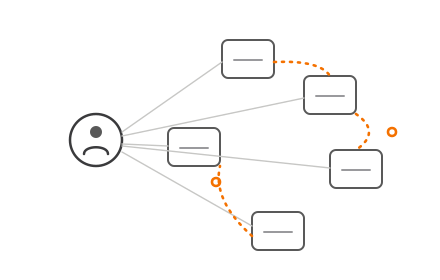
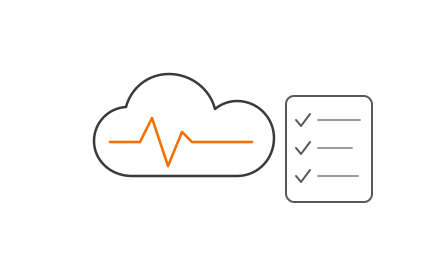
Enterprise software compliance frameworks GDPR HIPAA PCI-DSS SOC 2 requirements comparison

Ignoring these early creates expensive rework or legal exposure later. The average cost of a data breach has hit a record ₹40.6 crore. Meta's €1.2 billion GDPR fine puts a concrete number on what non-compliance looks like at scale.

Common Mistakes That Derail Enterprise Software Projects

Scope Creep and Governance Failures

Enterprise projects involve multiple departments and stakeholders, each with their own wishlist. Without clear governance and a formal change management process, requirements expand unchecked—leading to delays, budget overruns, and a bloated product that solves no single problem well. 52% of projects experience scope creep or uncontrolled changes, directly correlating with budget overruns.

Applying Small-Project Thinking to Enterprise Builds

Enterprise software development is not just "bigger" regular software development. Teams that apply small-project thinking—informal requirements, minimal architecture planning, no QA strategy—almost always hit serious problems at integration or deployment. The mindset shift required includes:

  • Treating requirements documentation as a living contract, not a one-time deliverable
  • Investing in architecture planning even when it feels like it's delaying the build
  • Building integration strategy before writing a single line of code
  • Establishing formal change control processes from day one

Treating Security and Testing as Late-Stage Activities

Security vulnerabilities discovered in production are far costlier to fix than those caught in design — IBM's research puts that multiplier anywhere from 6x to 100x depending on the stage. Teams that compress QA timelines to meet launch deadlines compound this by creating technical debt that surfaces as system failures under real-world load. Embedding security and testing throughout the development process — not bolting them on at the end — is the only reliable path to a stable enterprise release.

Conclusion

The 6-step enterprise software development process—from discovery through maintenance—exists to bring structure to a discipline where misaligned decisions compound quickly and quietly. Every stage has a purpose, and skipping steps rarely saves time — it just shifts the cost downstream, where fixes are harder and more expensive.

The process works best when paired with the right partner — one with hands-on experience across architecture, design, development, and data engineering. For organizations building enterprise software that scales and incorporates AI-driven capabilities, Codiot brings together custom development, data engineering, and AI integration under one engagement — so the process stays on track from requirements through release.

Frequently Asked Questions

What are the steps to develop enterprise software?

The 6 core steps are: requirements gathering and discovery, architecture planning and technology selection, UI/UX design and prototyping, Agile development and iterative build, testing and quality assurance, and deployment with ongoing maintenance. Each stage builds on the last, creating a structured lifecycle that reduces risk.

How long does enterprise software development take?

Timelines vary based on complexity, integrations, and scope. Basic enterprise applications typically take 6-9 months, mid-scale solutions require 9-14 months, and complex mission-critical platforms can take 14-24+ months.

What is the difference between enterprise software and regular software?

Enterprise software is designed for scale, multi-department use, complex integrations, strict compliance requirements, and long-term maintainability. Regular or consumer software typically serves individual users or small teams with narrower, simpler functions and fewer integration or regulatory requirements.

How much does enterprise software development cost?

Cost depends heavily on complexity, team size, and tech stack. Basic enterprise apps range from ₹1.25 crore to ₹2.08 crore, mid-scale solutions cost ₹2.08 crore to ₹4.16 crore, and complex platforms exceed ₹4.16 crore.

What methodologies are used in enterprise software development?

Agile (iterative, flexible) is the most common methodology, used by 71% of organizations. Waterfall is suitable for well-defined, fixed-scope projects but carries higher risk if requirements change. Hybrid approaches combining Agile iteration with Waterfall governance are now used by 74% of enterprises, balancing speed with compliance.

How do you ensure security in enterprise software development?

Security must be embedded from architecture design through deployment. This includes secure authentication mechanisms, data encryption, role-based access control, regular security audits, and compliance with applicable regulations (GDPR, HIPAA, SOC 2). Vulnerabilities introduced late are far more costly to remediate post-launch than those caught during design.