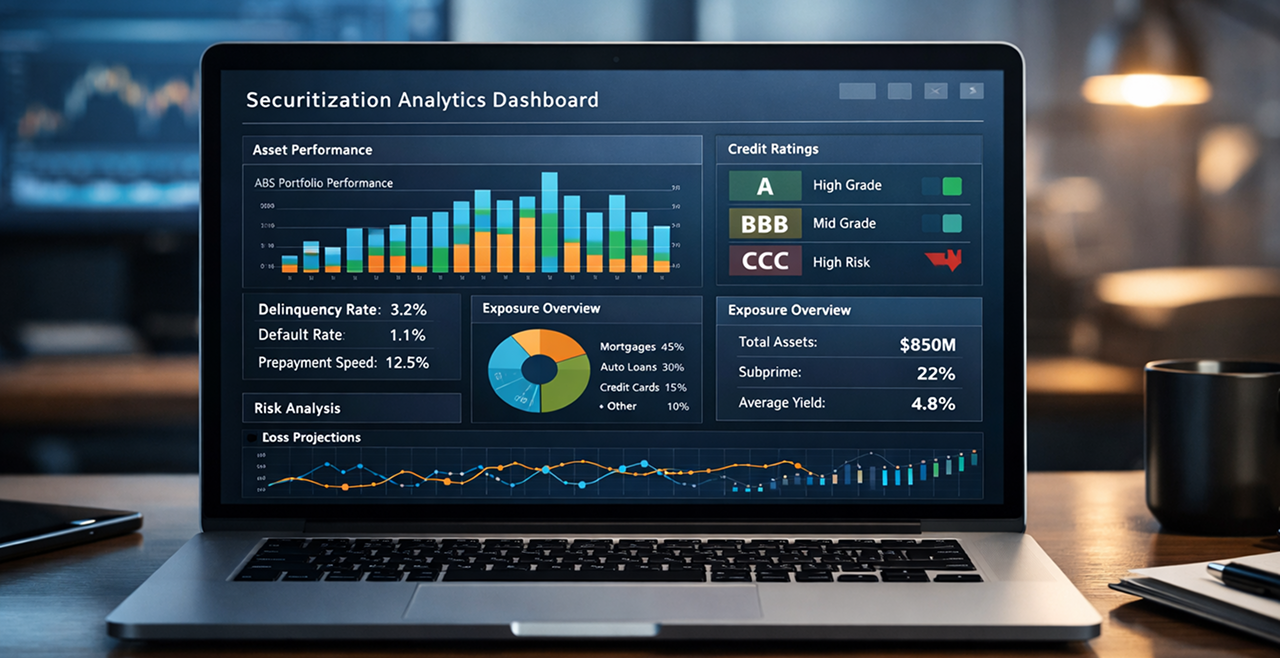
They want loan-level data including origination date, maturity, interest rate, property address, property type, appraisal value, LTV, borrower credit score, loan purpose, exit strategy, modification history, payment history, and about forty other fields depending on the collateral type. For a fix-and-flip pool, they want renovation budget, draw history, and completion status. For DSCR loans, they want rent rolls, DSCR calculations, and lease terms.
All of this needs to be in a standardized format. And it all needs to match. The loan amount in your LOS needs to match the amount on the note which needs to match the amount on the settlement statement which needs to match what’s in the servicing system.
You’d be surprised how often it doesn’t.
Where the data actually lives
The core problem is that most private lenders didn’t build their systems with securitization in mind. Why would they? When you’re doing $50M a year, you’re focused on getting loans closed, not on whether your data exports will pass a rating agency’s due diligence in three years.
So the data ends up scattered. Loan terms are in the LOS. Payment history is in the servicing platform. Appraisals are PDFs sitting in a folder on someone’s desktop or in a shared Google Drive. Draw schedules are in spreadsheets. Borrower docs are in DocuSign. Property details might be in Salesforce. And the loan tape that your capital markets analyst produces every quarter? It’s manually assembled from all of these sources, every single time, with a different person doing it each quarter and making slightly different judgment calls about which fields map where.
I’ve seen lenders spend 200+ analyst hours producing a single loan tape for a securitization. That’s five person-weeks of work just to answer the question: “What are the characteristics of the loans you want to sell?”
The scrub cycle
Once you produce the loan tape, the fun begins. The investment bank runs their own analytics. The rating agency runs theirs. Inconsistencies get flagged. Questions come back. Your team scrambles to find the source documents, reconcile the discrepancies, and re-submit.
This back-and-forth can take weeks. I’ve seen it take months. And every round of questions erodes confidence. The rating agency starts wondering whether the data issues they’re finding are just sloppy record-keeping or signs of something deeper. Your investment bank starts getting nervous about the timeline.
Meanwhile, you’re sitting on a pool of loans that are aging, which affects the pool’s weighted average life calculation, which affects the ratings, which affects the pricing. Every month of delay costs you real money.
Building the pipe before you need it
The lenders who avoid this mess are the ones who built their data infrastructure before they needed it for a securitization. Not years before. But at least six to twelve months before they expect to go to market.
What does that look like in practice?
First, a single data model that captures every field a rating agency will ever ask for, at the point of origination. Not after the fact. At origination. That means your LOS needs to collect the data, validate it in real-time, and store it in a structured format.
Second, a servicing data feed that updates loan performance daily and ties back to the origination data. Payment history, draw history, modification history, all flowing into the same system that produced the original loan tape.
Third, automated loan tape generation. You should be able to produce a securitization-ready loan tape at any moment, not as a quarterly fire drill but as a button click. Stratification tables, pool statistics, geographic concentration reports, all generated automatically.
Fourth, investor reporting that runs on the same data. When your deal is live and investors are receiving monthly reports, those reports should be pulling from the same source of truth as the original deal tape. Not from a separate spreadsheet that someone is maintaining by hand.
This is a significant engineering effort. And it’s not something you can buy off the shelf. Every lender’s collateral types, underwriting criteria, and reporting requirements are different enough that the data model needs to be custom.
What we’ve built
At Codiot Technologies, we’ve built securitization-ready data pipelines for private lenders ranging from $300M to $2B+ in originations. The work typically involves connecting the LOS, servicing platform, and document management system into a unified data layer with automated loan tape generation and investor reporting.
The lenders who invest in this infrastructure before their first rated deal report two things: the deal closes faster (often 60-90 days from engagement to pricing), and the execution is cleaner, which translates to better pricing and stronger investor appetite. One client saw their first rated deal oversubscribed 5x because the data package was clean enough that investors could underwrite quickly.
If you’re anywhere on the path toward a rated securitization, or even thinking about it, the data infrastructure conversation should start now. Not when the investment bank asks for a loan tape.
We offer a complimentary data readiness assessment specifically for private lenders evaluating their securitization infrastructure. No pitch. We map what you have, identify the gaps, and give you a clear buildout plan.