
Record-to-report automation & software
Month-end close takes two weeks of manual reconciliation, and by the time the report lands, the numbers are already stale. We build the pipeline that closes faster.
Talk to usWhat is record to report (R2R)?
You'll recognize one of these.
The spreadsheet reconciliation marathon
Every close, someone manually matches transactions across systems in a spreadsheet that only they understand.
The stale report
By the time the report reaches leadership, it reflects numbers from three weeks ago, not the current state of the business.
The audit scramble
When auditors ask for a transaction trail, the answer takes days to assemble instead of minutes.
Record to report (R2R), end to end.
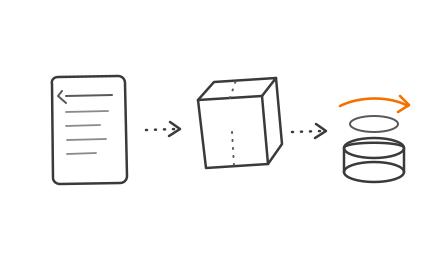
Automated reconciliation
Transactions matched across systems automatically, with exceptions flagged instead of everything checked by hand.
Consolidation pipelines
Multi-entity or multi-currency data rolled up without a manual spreadsheet merge.
Close checklists and workflows
A structured, trackable close process instead of a shared document everyone edits at once.
Reporting and dashboards
Financial reports generated directly from reconciled data, refreshed on demand.
Audit trail
Every adjustment and reconciliation step logged, so audit requests are a query, not a project.
ERP integration
Connects to your general ledger and ERP rather than duplicating data entry.
Your stack, not our preferences.
Common questions, answered plainly.
What does R2R stand for?
How much does R2R automation cost?
Can this reduce our close time?
Does this replace our ERP's reporting?
How long does implementation take?
Show us how this runs today.
One call. Walk us through how it works in your shop today, and we'll tell you honestly where custom software pays off, and where it doesn't.
Book the walkthrough